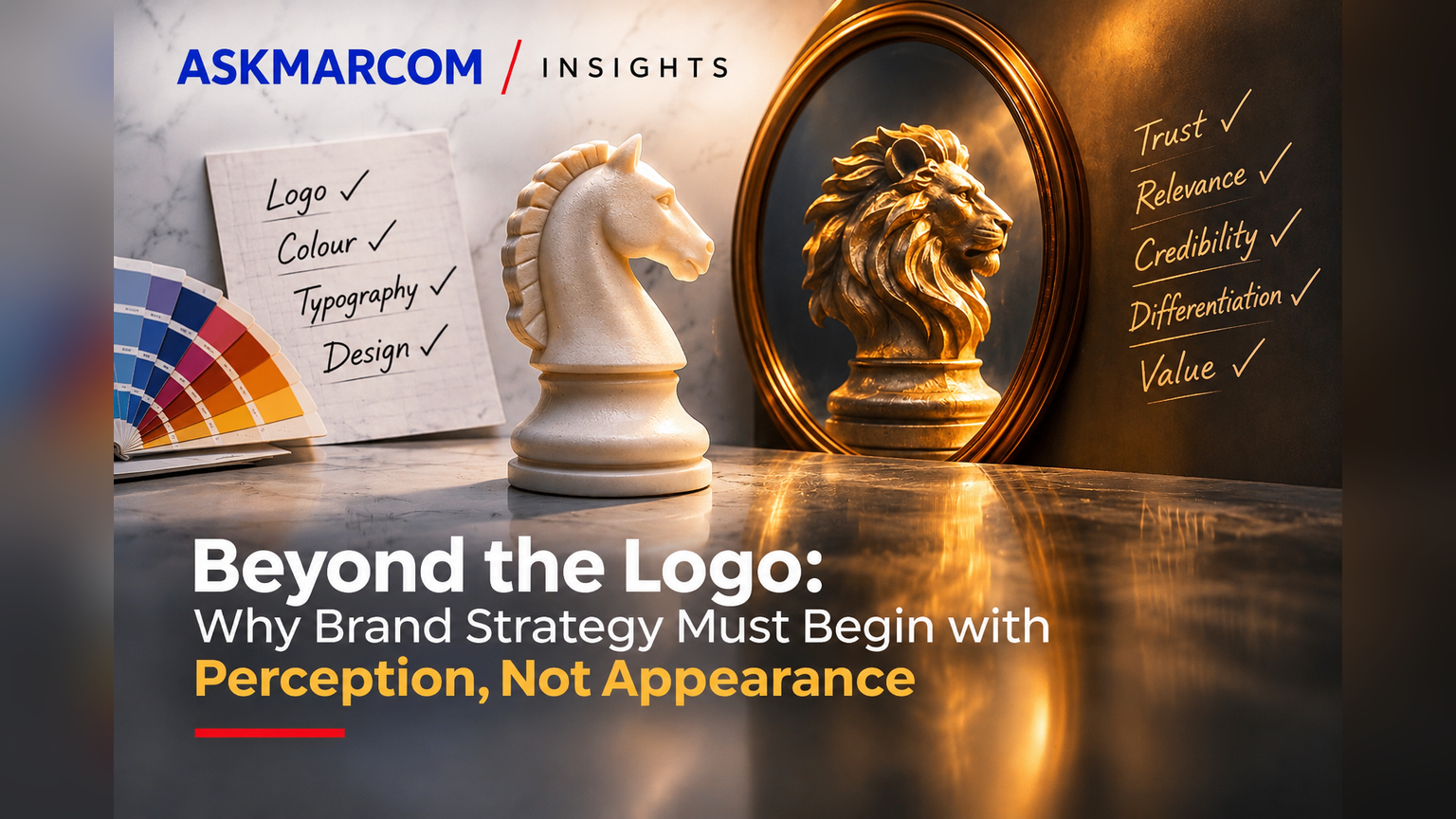
An effective brand is not defined by what an organisation puts on display. It is defined by what people understand, experience and remember.
A new logo. A redesigned website. A different colour palette. A fresh advertising campaign.
These are often the first things businesses consider when they decide that their brand needs a change.
But do they address the real problem?
A brand may have an attractive identity and still struggle to establish credibility. It may invest heavily in advertising and remain indistinguishable from its competitors. It may communicate consistently and yet fail to communicate anything meaningful.
The problem, quite often, is not how the brand looks. It is what the brand represents.
The difference between identity and perception
Brand identity is what an organisation deliberately creates and communicates. It includes its name, visual language, messaging, personality and values.
Brand perception is what audiences actually understand and associate with it.
The two are connected, but they are not interchangeable.
An organisation can decide that it is innovative, trustworthy, progressive or customer-centric. However, these attributes become meaningful only when people recognise them through their experiences and interactions with the organisation.
A brand cannot simply declare its reputation. It has to earn it.
When appearance becomes a substitute for strategy
Visual identity is important. Design influences recognition, recall and the way a brand is experienced.
But design cannot compensate for an absence of strategic clarity.
Changing a logo will not resolve unclear positioning. A new advertising campaign cannot automatically establish differentiation. A sophisticated website cannot, by itself, create customer confidence.
When businesses approach branding primarily as a visual exercise, they risk addressing the symptoms rather than the underlying problem.
The more important questions are strategic:
- What does the organisation stand for?
- Who does it seek to serve?
- Why should its audience choose it over alternatives?
- What distinct value does it offer?
- Does its communication reflect the experience it delivers?
Until these questions are addressed, even the most impressive visual transformation may remain superficial.
Strategy gives a brand its meaning
A meaningful brand begins with a clear understanding of its market, audience, competition and organisational purpose.
It requires positioning: establishing a distinct and relevant place in the minds of the people who matter.
It requires differentiation: identifying what makes the organisation genuinely distinctive, rather than merely claiming to be different.
It requires consistency: ensuring that communication, customer experience, organisational behaviour and reputation reinforce one another.
And it requires credibility: making sure that the promises a brand communicates are supported by what it actually delivers.
These are not isolated branding exercises. They are interconnected elements of a long-term strategic process.
Communication must reinforce the promise
A brand communicates through more than advertising.
Every interaction contributes to its identity and reputation: the quality of its products, the conduct of its people, its customer service, its leadership communication, its public presence and the way it responds when things go wrong.
This is why integrated marketing communication must begin with strategic alignment.
Different platforms and communication channels may require different formats and approaches. But they should reinforce a coherent brand position.
Without that coherence, communication becomes fragmented. Visibility may increase, but meaning does not necessarily follow.
From appearance to perception
The objective of brand strategy is not simply to make an organisation look different.
It is to establish why it matters, what it represents and how it should be understood.
Visual identity gives a brand recognition. Strategy gives it direction. Communication gives it expression. Consistent experience gives it credibility.
The strongest brands understand the relationship between all four.
At ASKMARCOM, we believe that meaningful brand building begins with critical thinking, not cosmetic change.
Because sometimes the most important change a brand needs is not a change of font.
It is a change of perception.
ASKMARCOM
Brand Strategy | Integrated Marketing Communication
One response
[…] previous Insight, Beyond the Logo: Why Brand Strategy Must Begin with Perception, Not Appearance, argued that a visual change cannot compensate for a lack of strategic clarity. The next step is to […]